
Today I had the privilege of attending and speaking at Teesside University’s Doctorate in Clinical Psychology EDI Conference, Vis-Ability: Shining a Light on Disability. Held in the Legends Lounge at the Riverside Stadium in Middlesbrough, the conference brought together clinicians, academics, students, carers and people with lived experience to explore disability from a range of perspectives.
What made the day feel different was that many of those leading the conversations were also sharing their own lived experience of disability.
I was honoured to be invited to share my Letter to My Ten-Year-Old Self. I originally wrote the letter for a Trust Board meeting, reflecting on my experiences of growing up with cerebral palsy and the barriers I encountered throughout my education and early life. After sharing it on my blog, I was delighted to be invited to read it again at today’s conference. You can read the letter in full here.
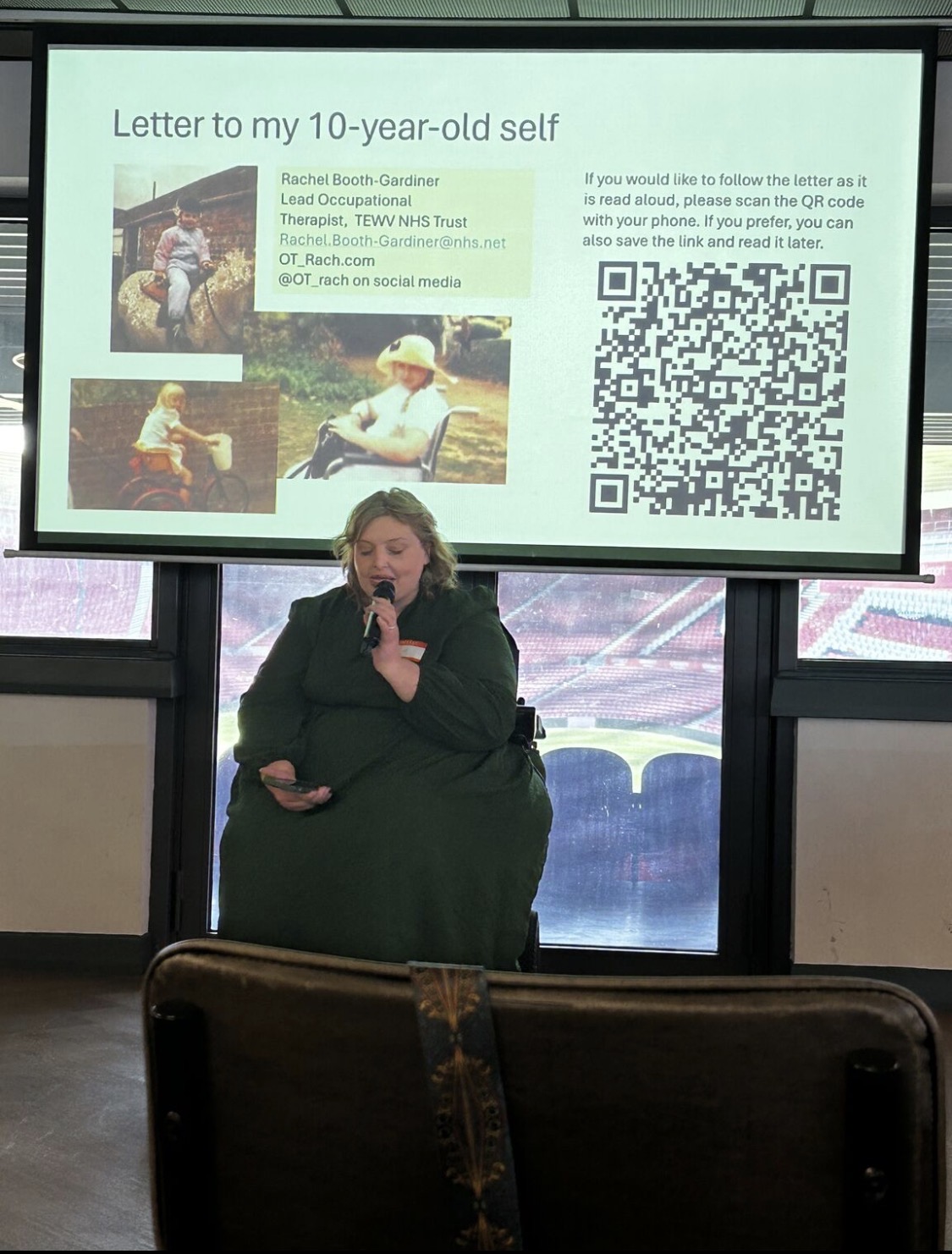
One of the highlights of the day was the conversations that followed. Several people told me how the letter resonated with their own experiences or those of their families. It reminded me of the power of sharing lived experience. Our stories help others feel seen, understood and, perhaps most importantly, remind people that they are not alone.
What was much harder to hear was how many of the barriers I described are still being experienced today. One parent spoke about the ongoing battle to secure the support their disabled child needs in education. Their story could easily have been my own, just told a generation later.
It left me asking myself a difficult question.
Will there ever be a time when disabled people can simply participate in education, work and society, with the support they need available as a matter of course, rather than something they have to fight for?
Listening to the conversations throughout the day, I was reminded that while progress has undoubtedly been made, there is still much work to do.
A profession talking about disability from within
As I reflected on the day travelling home, I realised what made this conference feel different.
Many of the speakers were clinical psychologists or trainee clinical psychologists with lived experience of disability or long-term health conditions. Rather than professionals talking about disabled people, disabled professionals were talking about their own lives, identities and practice.
There was something genuinely uplifting about seeing lived experience recognised as part of professional identity rather than something to hide. Disability was not presented as something that had to be overcome before becoming a clinician. Instead, it was recognised as part of who people are and, for many, something that had shaped their practice for the better.
Perhaps that is a sign of changing times.
The conversations reflected the breadth of disability, from physical disabilities and neurodiversity to long-term health conditions and fluctuating conditions. There was no attempt to present disability as a single experience because disability itself is wonderfully diverse.
Learning through lived experience
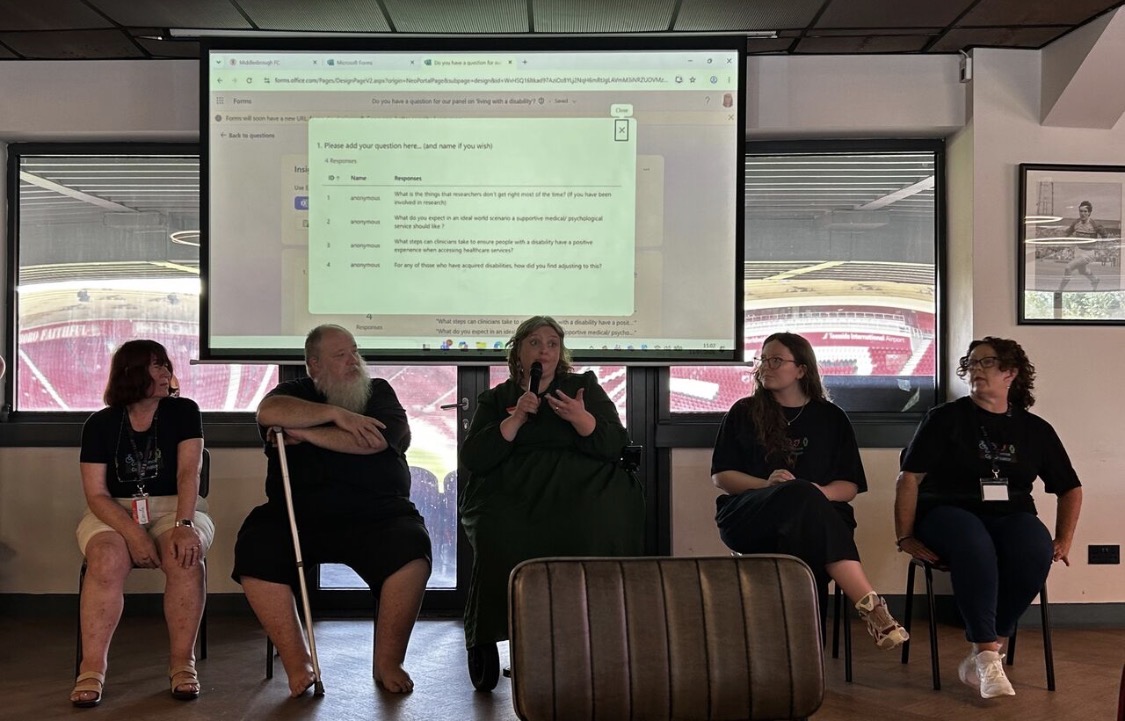
Dr Lesley Armitage explored how compassion-focused therapy can support people living with long-term health conditions, highlighting the role self-compassion can play in managing health and everyday life. As she spoke, I couldn’t help but compare many of the principles she described with occupational therapy. There were clear parallels with the way we support people to develop self-awareness, adapt to change, build on strengths and re-engage in meaningful occupations. Although our professions use different language and models, it was a reminder of how much we can learn from one another when our shared goal is helping people live the lives they want to lead.
Lee Ridley, better known as Lost Voice Guy, used humour to challenge stereotypes, reminding us that disabled people are not defined by tragedy or inspiration but are simply people living rich, complex and often very funny lives.
Joining us remotely from London during a busy day in the House of Lords, Baroness Tanni Grey-Thompson DBE brought an incredibly personal perspective to the conference.
She reflected on growing up with spina bifida and spoke openly about the barriers and ableism she has encountered throughout her life. At times, you could hear gasps around the room as she shared shocking examples of how she has been treated, including being told she should avoid travelling on the London Underground at busy times. She also spoke about the poor treatment she experienced during her pregnancy, including having news of her pregnancy reported in the media before she had the opportunity to share it herself.
While these stories were deeply personal, they also highlighted that disability discrimination is not confined to one setting or stage of life. Even as one of Britain’s most recognised disabled people, ableism remains a reality.
Baroness Grey-Thompson also spoke about the work she is doing in the House of Lords to improve the accessibility of public transport for disabled people. It was a reminder that while individual stories are powerful, lasting change also requires disabled people to have a voice where decisions are made.
The afternoon continued with discussions on carers’ rights, a panel on living with disability and reflections on working as a clinical psychologist while living with a disability. Together, the sessions reinforced that disability intersects with every profession, every service and every community.
Accessibility is more than a checklist
One of the things I appreciated about the conference was the thought that had clearly gone into making it accessible. There were accessible toilets, quiet spaces and an inclusive atmosphere where lived experience was genuinely valued.
Those things matter.
At the same time, attending as someone who uses an electric wheelchair outside the home reminded me that accessibility is about far more than a checklist.
Getting from the car park to the conference space involved negotiating several heavy doors. Individually, they were minor barriers. Together, they highlighted how accessibility is often experienced as a series of small obstacles rather than one significant one.
Inside the conference room, I arrived early and found a suitable place before it filled. Once everyone had arrived, however, the layout made it much harder to move around.
These may seem like small details, but they matter. Accessibility is not simply about ramps and accessible toilets. It is about considering the whole journey and creating spaces where disabled people can participate fully.
The morning also included a body mapping exercise, where we were encouraged to focus on different parts of our bodies and our breathing. The facilitators acknowledged that the activity might not be suitable for everyone and made it clear that participation was entirely optional, something I really appreciated.
For me, living with persistent pain, focusing on my body simply heightened my awareness of pain that I usually manage by directing my attention towards meaningful occupation instead.
It was another reminder that even well-designed wellbeing activities will not work in the same way for everyone. Sometimes true inclusion means giving people the choice to participate in ways that work for them, or not to take part at all.
The afternoon activity session prompted another reflection. Delegates could try using a mobility scooter, have a go at controlling an electric wheelchair, wear simulation glasses that altered vision and complete everyday tasks while wearing oversized gloves to mimic reduced hand function.
I have taken part in these activities myself and facilitated them many times over the years. Increasingly, though, I find myself questioning what they actually teach.
Can someone really understand disability by spending five minutes in a wheelchair or wearing simulation goggles?
We would never suggest that someone could better understand racism by dressing up as a person of colour, nor would we ask someone to wear a hijab for ten minutes and suggest they now understand Islamophobia. Yet we often assume that temporarily simulating an impairment helps people understand disability.
These activities can help people appreciate practical barriers and demonstrate how inaccessible environments create challenges. There is value in that.
But disability is so much more than an impairment. It is identity. It is relationships. It is navigating attitudes, assumptions and systems every single day.
A simulation cannot replicate that experience because, once the activity ends, participants return to lives where those barriers no longer exist.
I’m not suggesting these activities should disappear altogether. Rather, I think we should be willing to ask whether they remain the most effective way of developing disability awareness. Perhaps listening to disabled people’s stories, learning from lived experience and working alongside disabled colleagues offers a deeper understanding than any simulation ever could.
Looking ahead
I left the conference encouraged by the honesty of the conversations, the growing visibility of disabled professionals and the willingness to celebrate disability as part of professional identity rather than something to hide.
At the same time, the day reminded me that inclusion is never finished. Even at a conference dedicated to disability, there are opportunities to think more deeply about accessibility, participation and how we create environments where everyone can flourish.
Perhaps that was my biggest takeaway from the day.
Inclusion isn’t simply about inviting disabled people into the room. It is about listening to our experiences, recognising our expertise and being willing to keep learning, even when we think we are already doing well.
My thanks go to the Doctorate in Clinical Psychology team at Teesside University for organising such a thoughtful event and creating a space where disability was not simply discussed, but celebrated.
The conference closed by inviting us all to make a personal pledge.
Mine is simple.
To continue using my voice as a disabled person, occupational therapist and advocate to challenge ableism, promote accessibility and work towards a future where disabled people can participate with the support they need available as a matter of course, rather than something they have to fight for.

Leave a Reply